2015 Might Be the Year of Steam Broadcasting Versus Twitch

Gamers will have to decide which streamers to watch

When I look back at 2014, I tend to focus on the video games that I have played or the news that might influence the evolution of the Xbox One or the PlayStation 4 in the coming years, but for a growing audience the past 12 months were the moment when Twitch video streaming has become more important than actually playing.

At the moment, there are personalities who broadcast their activity on the service and have massive audiences, but there’s also space for players who want to simply show how they experience their favorite titles.

Twitch is fast becoming a better way to evaluate a game than reading a classic review and major publishers are working to sponsor the channels with the biggest audience, while producing their own streams to show off features of upcoming releases.

Steam Broadcasting enters the fray

Valve surprised a lot of people when it announced that it was adding a Broadcasting feature to Steam, its dominating digital distribution service.

The concept is more limited than that of Twitch but it can be used to stream video game content (and more) to a smaller audience which is made up of friends.

Valve has not announced any plans to expand Broadcasting in 2015 in any major way but gamers can expect to see it play a major role in upcoming DOTA 2 tournaments or other Valve events.

Massive audiences versus smaller circles of friends

The common view is that, at one point, Steam Broadcasting will become a true rival for Twitch and that the two services will compete for a while, trying to introduce new features and to increase their audiences, before one of them becomes a footnote in the history of video games.

But I suspect that Valve is not aiming to create a solution for mass streaming but rather a way for smaller circles of friends to show each other gameplay and to comment on it.

Twitch seems to be focused on big audiences at the moment and the Steam feature can become important if it manages to become relevant for smaller groups, giving them easy-to-use tools to create content and to then share it.

The two can co-exist and the only downside is that a growing number of gamers will continue to watch rather than play in the coming year.

Dailymotion launches Twitch competitor for video game streaming

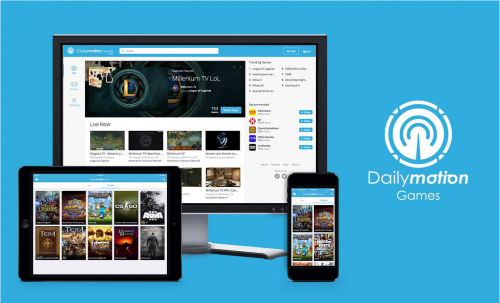
Paris-based online video platform Dailymotion wants a piece of the video game streaming pie: the company launched a new live streaming service called Dailymotion Games Wednesday. The service basically tries to do what Twitch has been doing so successfully: Offer video gamers a way to live stream their gameplay so they can attract a big audience for tournaments, review games in front of a live audience or simply show off their skills.

dailymotion

Dailymotion Games is available on the web, as well as via dedicated apps for iOS, Android and for Sony’s PS4.

Dailymotion already sees more than 180 million video views per month for video game content, the company revealed Wednesday, adding that more than 11 million unique visitors tune into video game content every month.

But it’s likely that not just the own metrics prompted Dailymotion to go down this route: Industry leader Twitch not only managed to attract a monthly audience of 60 million video game fans, the site was also acquired for $970 million in cash last summer. Dailymotion on the other hand has had troubles to find an exit: The company was talking about selling to Yahoo two years ago, but French regulators put an end to the sale, balking at the idea that am American company would own more than 50 percent of Dailymotion.

Steam Broadcasting works great, but Twitch isn’t threatened yet

Steam Broadcasting works great but Twitch isn't threatened yet

The first thing I watched with Steam’s new livestreaming service was Dragon Ball Z. Then I shot over to another instance of Media Player Classic to watch some other anime I couldn’t identify. When the stream cut out, the chat filled with one viewer’s cries of “FUCK THE MODS WE RUN THIS SHIT.”

Just like Steam’s tagging functionality, which initially had undesirable results, it’s going to take some time for Valve to get Steam Broadcasting right, which may include protecting itself from legal repercussions (and I can’t imagine the complexity involved in doing so). For that reason and more, cries of “Twitch is dead” are massively premature. I’m not even sure Valve is gunning for the current leader in livestreaming, and after playing with the beta release today, I don’t think it’s any competition yet. I do like it, but it offers something different—an easy way to share with friends.

And Valve does have advantages. When I want to Stream on Twitch, I set up OBS, test it, then tell everyone on Twitter that it’s happening and hope for some viewers. On Steam, which already houses most of the games I play, I just set it up once and play any game in my library. The streams are a good quality (mostly), and I haven’t had performance problems while playing. My biggest fear is that I’ll forget I’ve set my streams public because it works so smoothly.

If I do decide to let anyone watch, any game I’m playing on Steam, I will be posted as a broadcast in the game’s community hub. A couple minutes after I started streaming Metro: Last Light—not exactly a brand new game—three viewers showed up, and all I was doing, was sitting at the menu. Steam offers a massive audience, so I expect popular games and streams to draw a lot of attention. It could be huge.

Steam Broadcasting works great but Twitch isn't threatened yet 2

But Twitch has a huge audience, too. There are over 69,000 people watching League of Legends as I write, with one stream alone drawing over 24,000 of them. Over on Steam, the biggest Dota 2 stream at the time of writing has 179 viewers. Most have none. So, this isn’t a magic bullet, and it’s going to take time for Steam Broadcasting to grow. Additionally, Steam doesn’t offer what Twitch does, and may never. Here are a few of the reasons Twitch streamers aren’t going to abandon their posts:

  • Streaming on Steam means streaming with the Steam client. Twitch streamers can use Open Broadcaster Software, Xsplit, and others to customize their video.
  • Viewing Steam streams is only currently supported in Safari, Chrome, and the Steam client. Twitch already has popular mobile apps.
  • Steam currently cannot archive broadcasts. Twitch no longer saves archived streams forever, but it can export them to YouTube.
  • You currently need to be logged into Steam to view broadcasts, and they can’t be embedded on other websites.
  • Popular Twitch streamers can make money from their broadcasts, and that’s not the case on Steam, so they have no incentive to jump ship. (That does mean that Steam’s broadcasts are nicely ad-free, but of course they are—Steam is already a store where products are promoted.)

Some of this may change in later releases, and it’s possible that big Dota 2 and CS: GO tourneys will feel cozier on Steam (where Valve could potentially sell access), but we’ll just have to see where that goes. For the moment, I don’t see Steam as a competitor to Twitch, which isn’t to say Twitch is the best possible service; it’s just different. Steam Broadcasting is a service for Steam’s community, while Twitch is a business opportunity and e-sports hub. If I were running a tournament, I’d use Twitch, but if I want to share a game with friends, I’ll probably use Steam starting now.

I could notice Evan playing CS: GO, and decide I want to absorb some of his skill. He could notice me playing some new Early Access game, and find out what I think of it. It’s easy, too. With the latest beta client installed (you can set that up in Steam’s preferences), all you have to do, is right click a friend’s name and hit “Watch game.” Depending on their settings, it’ll either send you to the stream, or let them choose whether or not to share (it can also be set to invite-only, so that you don’t have to opt out of requests). I’m going to prefer privacy most of the time, but I’d happily run around Far Cry 4 with an audience of friends. It would feel like a hassle to start a Twitch stream just to show Evan how much C4 I stuck to an elephant (and I wouldn’t have bothered), but if he’s already in Steam all he has to do, is ask.

That’s the real value of Steam Broadcasting for me. If Valve gets aggressive next year, we could see certain tournaments and big streamers switch over, but right now, I don’t think Valve is taking on Twitch. (In fact, I’ve seen many users suggest adding Twitch support.) And anyway, I hear that League of Legends, Hearthstone, World of Warcraft, StarCraft II, and Minecraft are pretty big despite their non-inclusion in Steam. It’s apparently possible to use Steam to broadcast non-Steam games, but why would you?

Originally posted on PC Gamer

Twitch Partner Spotlight

Twitch announced the Twitch Partner Spotlight program, aimed at shining a light on the massive array of awesome Twitch partners, regardless of size, and giving them a chance to showcase their broadcasting talents with a wider audience!

How does it work?
Every week on the Twitch Weekly show, they are going to announce a new Partner spotlight for the upcoming week, during which time that Partner will receive not only the Twitch Weekly shout out, but an official mention on their social media platforms (Twitter, Facebook, Google+) and have a high likelihood of receiving premium placement on the front page of the site (pictured below) whenever they’re live during that week.

Here’s an example of what the Twitch front page looks like when a partner gets spotlighted using Absnerdity, our very first Twitch Partner Spotlight pick.


AbsnerdidtySHowoff

I’m a broadcaster – how do I get chosen?
With over a million broadcasters streaming, Twitch will be hard at work finding the hidden gems and rising stars that they think could best retain some of the growth that this increase in exposure would bring. Twitch’s Partnerships team will look at stats like chat activity, follower retention during spikes/raids, frequency and consistency of broadcasts, and a bunch of other behind the scenes stats before making their recommendation. The best advice, they are giving, is just to keep putting on the best possible broadcast experience for your followers and let the rest flow from there.

If you want to highlight something interesting or unique about your stream, feel free to send your info in a Twitch PM (better yet, include a 60-90 second video explaining your stream and it might be played on Twitch Weekly!) to the Twitch users “Twitch” or “TwitchWeekly“.

I’m not a broadcaster – what does this mean for me?
Twitch hopes that this is not only a beneficial program for broadcasters – who have a shot at really growing their audience – but to viewers as well, who may stumble upon an amazing, entertaining streamer they never would have found otherwise. So keep your eye out for the “Partner Spotlight” icon when you visit Twitch and you may just find a new favorite broadcaster!

Microsoft’s New YouTube and Twitch Rules Don’t Apply to Minecraft

You can make YouTube videos with Microsoft’s games as long as they’re not lewd or Pornographic.

Microsoft has updated its Game Content Usage Rules page to explain how people can use its game content to create YouTube videos and Twitch Streams, but the new rules don’t apply to Minecraft, which Microsoft acquired last year for $2.5 billion.

The new policy states that Microsoft allows users to create derivative works based on its games strictly for personal, non-commercial use, as long as they follow a set of rules. Some of these rules prohibit users from reverse engineering games to “access the assets or otherwise do things that the games don’t normally permit,” or creating content that is “pornographic, lewd, obscene, vulgar, discriminatory (on the basis of race, religion, gender, sexual orientation, etc.), illegal, hate speech, promoting violence, drug use or any illegal activity, promoting crimes against humanity, genocide or torture, or is otherwise objectionable.”

“Whether an Item is ‘objectionable; is up to us, but you can expect us to be concerned if a significant number of people in the game’s community or the public at large report the content as offensive,” Microsoft said.

You also can’t earn compensation with derivative works by selling it or through advertisements, unless you’re posting it to YouTube and Twitch.

The new rules apply to all of Microsoft’s products except Minecraft, which retains its own guidelines. The rules are not that different (mostly common sense in both cases), but Minecraft is a bit more lax, allowing users to create and sell whatever content they want as long as its clear that it’s not an official Minecraft product.